
Thursday, March 19 is one of the most consequential macro sessions of the first quarter. A day after the Federal Reserve delivered a hawkish hold that rattled global markets, three more central banks take centre stage — the Bank of England, the European Central Bank, and the Swiss National Bank all deliver decisions today. Add to that a full slate of labour market, manufacturing, and trade data across four continents, and the result is a session where every major asset class faces meaningful event risk before the European close.
Asia: BOJ Holds, Australia Beats, Japan Surprises
The Asian session opened with a string of data points that painted a more resilient picture than the post-Fed risk-off mood suggested. Australia’s Employment Change printed at 48.9K — nearly double the forecast of 20.8K and well above the prior 26.1K. That is a strong beat by any measure, and the Australian dollar responded with a sharp move higher. The Unemployment Rate ticked up to 4.3% from 4.1%, but the employment beat dominated the reaction. The RBA Financial Stability Review, released alongside the data, offered no major surprises.
Japan delivered its own upside surprise. Revised Industrial Production m/m came in at 4.3% against a prior of 2.2% — a significant upward revision that signals stronger-than-expected factory output in February. The yen strengthened modestly on the number. The Bank of Japan held its policy rate below 0.75% at the 4:46am decision, with the Monetary Policy Statement offering no hawkish pivot. Governor Ueda’s press conference at 8:30am is complete — the tone was cautious, and markets are not pricing in a near-term hike.
Japan’s Core Machinery Orders m/m earlier in the session came in at -5.5% against a forecast of -9.6% — a smaller decline than feared, which is modestly positive for the capex outlook.
9:00am — UK Labour Market: Slowdown in Wages, Rising Unemployment
The UK data triple release this morning delivered a mixed picture. Claimant Count Change came in at 25.8K against a prior of 28.6K — fewer people claiming unemployment benefits than last month, which is modestly positive. However, the Average Earnings Index 3m/y slowed to 3.9% from 4.2%, and the Unemployment Rate edged higher to 5.3% from 5.2%.
The combination of slowing wage growth and rising unemployment strengthens the case for the Bank of England to cut rates sooner rather than later. GBP/USD is under pressure — dollar strength from the FOMC is compounding the domestic softness. UK equities (FTSE 100) are receiving mixed signals: a weaker pound helps the internationally-exposed large caps, but rising unemployment raises growth concerns for domestically-focused mid-caps.
10:30am — Swiss National Bank: Floor at Zero
The SNB holds its Policy Rate at 0.00% — exactly as expected and unchanged from the prior. With rates already at the floor, the Monetary Policy Assessment and press conference at 11:00am are the only market-moving outputs. The key question is whether the SNB pushes back against franc strength. In a risk-off environment driven by a hawkish Fed, the Swiss franc tends to appreciate — and the SNB has historically been uncomfortable with a strong franc that hurts Swiss exporters.
USD/CHF is the pair to watch around 10:30–11:00am. Any hint of FX intervention or tolerance for a weaker franc would push USD/CHF higher and add to the broader dollar-strength theme that is weighing on commodities and emerging market currencies today.
Swiss equities (SMI) would benefit from a weaker franc — it reduces the currency headwind for export-heavy names like Nestlé, Novartis, and Roche.
2:00pm — Bank of England: Hawkish Hold Expected
The BOE decision is the first major European central bank event of the afternoon. The Official Bank Rate is expected to hold at 3.75% — unchanged from the prior meeting. The significant data point is the MPC vote split: the forecast is 0-2-7 (zero for hike, two for cut, seven for hold), compared to the prior 0-4-5. Fewer members voting for a cut is a hawkish shift in composition — even if the rate itself does not move.
A vote split at 0-2-7 or more hawkish (0-1-8 or 0-0-9) would provide meaningful support to the pound and could trigger a short squeeze in GBP/USD given current positioning. A split that matches or exceeds the prior dovish composition (0-4-5 or more) would accelerate the GBP decline.
GBP/USD: Highly sensitive to the vote split. This is the key number to watch at 2:00pm. UK gilts will also react — fewer cut votes pushes gilt yields higher, which tends to support financials and weigh on rate-sensitive sectors like real estate and utilities.
The BOE Inflation Letter — published when inflation deviates significantly from the 2% target — is tentatively scheduled and will be parsed for the Governor’s explanation of current price dynamics and the expected path back to target.
2:30pm — US Unemployment Claims and Philly Fed
Weekly Unemployment Claims are forecast at 215K, slightly above the prior 213K. This is the first significant US labour market data point since the hawkish FOMC, and it matters. If claims come in above 220K, markets will question whether the Fed’s confidence in labour market resilience is warranted — and that doubt could trigger a partial reversal of yesterday’s dollar strength. A reading at or below 213K would cement the hawkish Fed narrative and extend the dollar rally.
The Philadelphia Fed Manufacturing Index is forecast at 8.3, down sharply from the prior 16.3. A reading below zero — contraction territory — would be a meaningful signal of deteriorating US factory conditions and would add to recession concerns that could ultimately force the Fed’s hand on cuts sooner than signalled.
S&P 500 and Nasdaq futures are sensitive to both releases. Weak claims + weak Philly Fed = stagflation concerns = difficult environment for equities. Strong claims + strong Philly Fed = hawkish Fed confirmed = equity pressure from higher-for-longer rates. Neither combination is straightforwardly positive for stocks today.
3:15pm — European Central Bank: Hold at 2.15%
The ECB holds its Main Refinancing Rate at 2.15% — matching the prior and the forecast. With Eurozone CPI confirmed at 1.9% yesterday — below the 2% target — the ECB has room to signal further easing. President Lagarde’s press conference at 3:45pm is the session’s most market-moving event after the BOE vote split.
If Lagarde strikes a dovish tone — emphasising the below-target inflation print and downside risks to growth — EUR/USD faces additional downside pressure. The pair is already weakened by dollar strength from the FOMC. A dovish ECB on top of a hawkish Fed is a powerful combination that could push EUR/USD toward the 1.07 support level, which has not been tested since late 2025.
European indices (DAX, CAC 40, Euro Stoxx 50): A dovish ECB is broadly positive for rate-sensitive European equities — lower borrowing costs improve valuations. However, if EUR/USD weakness signals deteriorating confidence in the European economic outlook, the equity benefit may be partially offset. Export-heavy German industrials and French luxury names — where euro weakness actually helps revenues — are the relative beneficiaries.
EUR/USD: The critical level to watch is 1.07. A dovish Lagarde that breaks that floor would be a significant technical and fundamental development. EUR/GBP is also in play — if the BOE is more hawkish than expected at 2:00pm and the ECB more dovish at 3:15pm, the cross moves sharply in favour of the pound.
The Euro Summit — All Day
European Union leaders are meeting today for the Euro Summit. The agenda covers fiscal coordination, defence spending, and the EU’s response to US trade policy. Any announcements around joint EU fiscal stimulus or defence expenditure agreements would be euro-positive and could partially offset the dovish ECB impact on EUR/USD. This is an underappreciated risk event — watch for headlines throughout the session.
Full Asset Class Summary
- EUR/USD: Under pressure — hawkish Fed + potentially dovish ECB. Key level: 1.07. Euro Summit headlines could surprise to the upside.
- GBP/USD: Weak labour data weighing, but BOE vote split at 2:00pm is the decisive moment. Hawkish split = GBP bounce. Dovish split = further decline.
- USD/JPY: Dollar strength dominant. Strong Japanese IP a secondary support for yen. Watch for BOJ intervention language if pair moves aggressively.
- AUD/USD: Employment beat is AUD-positive but dollar strength limits the move. Net: modest outperformance vs other risk currencies.
- USD/CHF: SNB press conference at 11:00am — intervention language would push pair higher.
- S&P 500 / Nasdaq: Post-FOMC pressure continues. Claims and Philly Fed at 2:30pm could extend decline or trigger relief. No clear bullish catalyst until data softens significantly.
- DAX / CAC 40: Dovish ECB is structurally positive. Euro Summit headlines add optionality to the upside.
- FTSE 100: Weaker pound helps large-cap exporters. BOE decision at 2:00pm is the key domestic driver.
- UK Gilts / German Bunds: BOE hawkish hold pushes gilts lower (yields higher). Dovish ECB pushes bunds higher (yields lower).
- WTI Crude: Dollar strength is the primary headwind. Natural Gas Storage at 4:30pm (+39B forecast vs -38B prior) — a large build would weigh on gas prices.
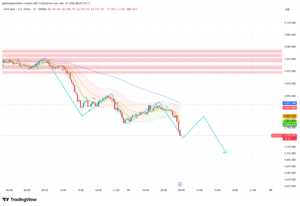
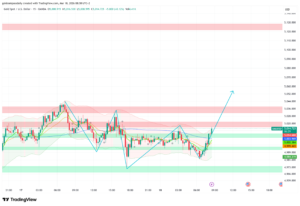
- Gold (XAU/USD): Bearish continuation from post-FOMC. ECB dovishness at 3:45pm could be the final catalyst. Watch EUR/USD as the leading indicator.
Today is a session where the macro tape moves fast and in multiple directions simultaneously. The BOE vote split at 2:00pm and Lagarde’s tone at 3:45pm are the two events most likely to set the direction for European and commodity markets into the close. Position sizes matter on a day like this.
Economic data sourced from the daily macro calendar for March 19, 2026. This article is for informational and educational purposes only and does not constitute financial advice.

Written by T. S. Gospodinov
T. S. Gospodinov is an Independent gold market analyst focused on liquidity structures and macro-driven price cycles.