The Gold Price Crash: What Investors Need to Know Right Now
Gold has long been considered the ultimate “safe haven,” but the recent price action in early February 2026 has left many casual investors and seasoned traders in a state of shock. After a historic rally that saw prices climb toward unprecedented highs, the market experienced a sharp, aggressive correction. This move has raised one vital question: Is this the end of the gold bull market, or simply a necessary “cooling off” period?
Understanding the Recent Gold Price Crash
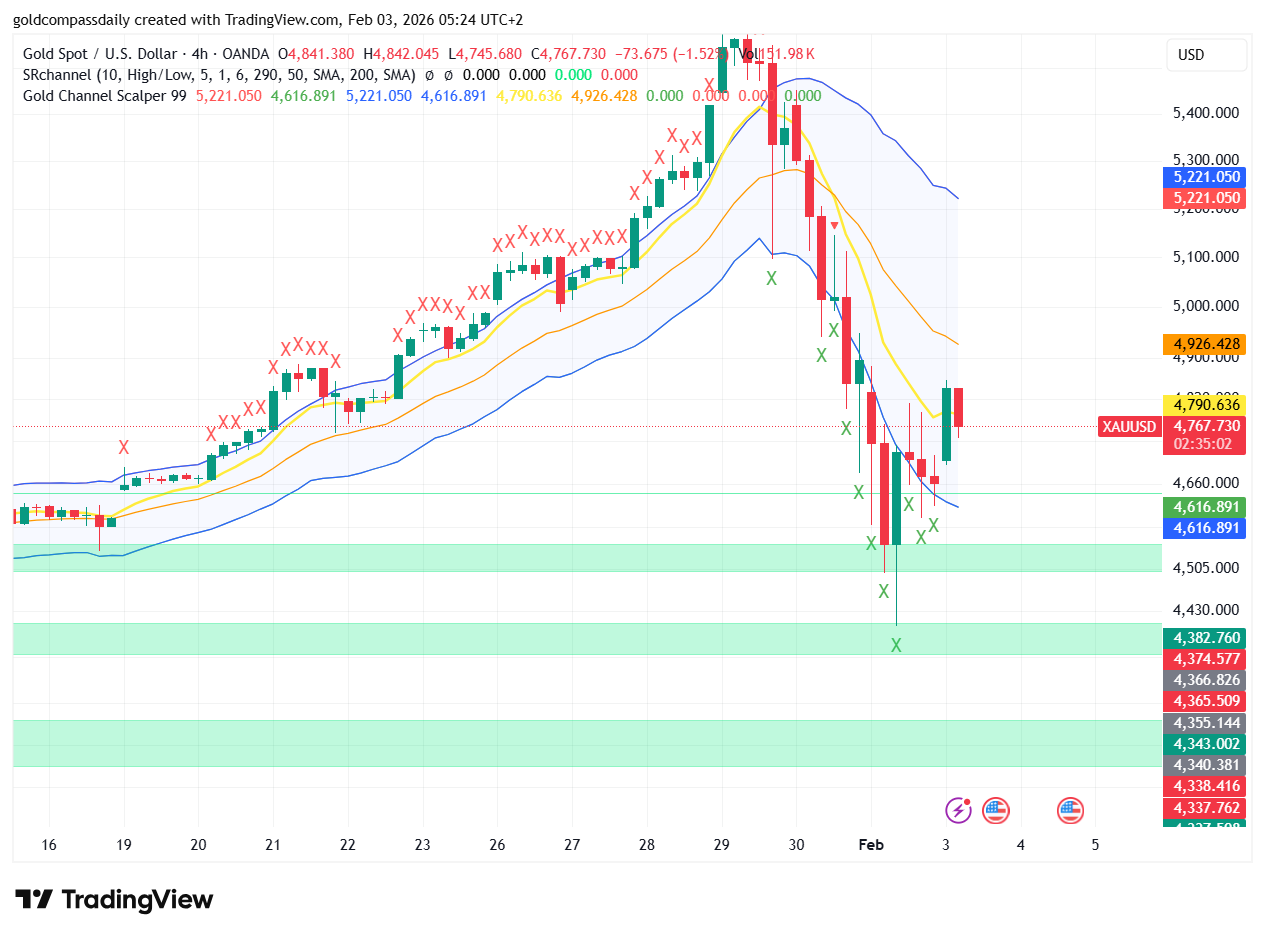
Looking at the 4-hour technical charts, the reversal was swift. After a steady climb throughout late January, the price hit a vertical “parabolic” phase. In market terms, this often signals exhaustion. When prices move too far, too fast, they become unsustainable. The subsequent Gold Price Crash saw XAU/USD drop through multiple support levels in a matter of days, wiping out weeks of gains.
For the general public, this isn’t just about lines on a graph. It reflects a shift in global sentiment. Whether triggered by changing interest rate expectations or a sudden easing of geopolitical tensions, the “fear trade” that drove gold upward has momentarily evaporated, leading to a mass exit by institutional investors.
The “Dead Cat Bounce” vs. A Real Recovery
Currently, the chart shows gold attempting to find a floor around the 4,700 – 4,760 zone. While we are seeing a small green candle in the latest session, caution is required. In a downward trend of this magnitude, we often see what is known as a “dead cat bounce”—a temporary recovery before prices resume their fall.
To confirm a real recovery, gold needs to stabilize and reclaim the mid-range levels near 4,900. Until then, the momentum remains bearish. For those looking to protect their savings, the current volatility suggests that “buying the dip” might be premature until a clear base is formed.
Why This Matters for Your Portfolio
Gold usually moves inversely to the US Dollar and Treasury yields. The suddenness of this Gold Price Crash suggests that the market is repricing the value of the dollar or reacting to a significant shift in inflation data. If you hold physical gold or gold-backed ETFs, this volatility is a reminder that even the safest assets are not immune to market gravity.
- Support Levels: Watch the 4,616 and 4,500 marks. If these fail, we could see a deeper retracement.
- Resistance: The previous highs near 5,200 now act as a major psychological barrier.
- Investor Sentiment: Panic selling is visible, but long-term fundamentals for precious metals often remain intact despite short-term crashes.
Conclusion: Opportunity or Warning?
While the headlines may seem frightening, market corrections are a healthy part of any financial cycle. This crash has flushed out “weak hands” and speculative buyers who entered late at the top. For the patient investor, the coming weeks will provide clarity. Are we heading back to the 4,300 levels, or is this the foundation for the next leg up? Stay informed, watch the key levels, and avoid making emotional decisions during periods of high volatility.

Written by T. S. Gospodinov
T. S. Gospodinov is an Independent gold market analyst focused on liquidity structures and macro-driven price cycles.