

Gold Price Forecast 2026: Navigating the Recent Market Turbulence
The gold market has entered a period of extreme uncertainty in early February 2026. After a historic run that captured global headlines, the “yellow metal” experienced a sharp correction that left many investors questioning the stability of their portfolios. However, the latest 1-hour price action suggests that the initial panic may be subsiding, leading to a critical junction for the Gold Price Forecast 2026.
Understanding these shifts is essential for anyone holding precious metals or considering an entry. Unlike the slow movements of years past, the current market is reacting instantly to shifts in global liquidity and geopolitical shifts, making every support level a battleground between buyers and sellers.
Analyzing the 1-Hour Chart: Signs of a Bottom?
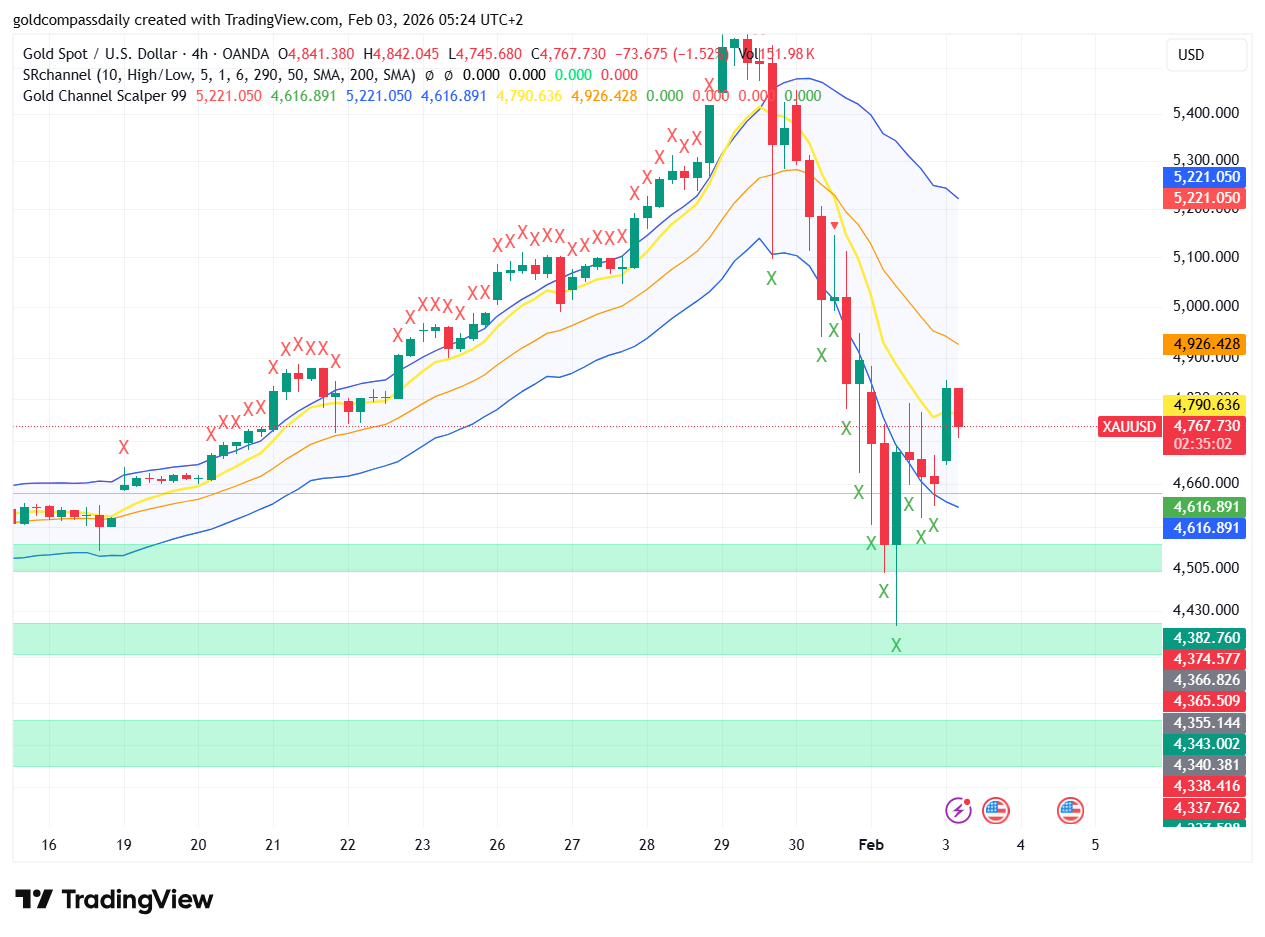
A closer look at the hourly data reveals a fascinating story. Following the aggressive sell-off that saw prices tumble from above 5,300, gold found a temporary floor near the 4,500 level. Since then, we have observed a series of “higher lows”—a technical pattern that often precedes a recovery. As of February 3, 2026, gold is trading around 4,770, attempting to breach the immediate resistance zones.
For the average investor, this means the “free fall” has paused. The market is no longer in a blind sell-off; instead, it is entering a consolidation phase. This “sideways” movement is where the big players—banks and institutional funds—usually decide whether to push the price back up or allow it to sink further toward the next major support at 4,430.
Key Factors Influencing the Gold Price Forecast 2026
Several macro-economic pillars are currently holding the weight of gold’s valuation. While technical charts show us where the price is going, fundamental analysis tells us why. To understand the future of gold this year, we must look at three critical factors:
- Inflationary Pressure: If inflation remains “sticky,” gold will likely maintain its status as a hedge, despite short-term crashes.
- The Strength of the US Dollar: Gold and the dollar usually sit on opposite ends of a see-saw. The recent dip in gold coincides with a renewed strength in the greenback.
- Geopolitical Risk: Any sudden escalation in global tensions historically sends investors rushing back to the safety of gold, regardless of previous technical breakdowns.
Is It Time to Buy the Dip or Wait?
The most common question facing the Gold Price Forecast 2026 right now is whether this current price level represents a “discount” or a “trap.” Currently, the price is testing the 4,750 – 4,800 resistance cluster. A clean break above this area could trigger a wave of “FOMO” (Fear Of Missing Out) buying, potentially driving prices back toward the 5,000 psychological milestone.
However, risk management remains paramount. If the price fails to hold the 4,550 support level, the technical outlook turns grim, suggesting that the correction could extend significantly. For the conservative investor, waiting for a confirmed trend change on the daily timeframe might be safer than trying to catch a “falling knife” on the hourly charts.
The Bottom Line for Investors
Gold remains the world’s oldest form of insurance. While the recent volatility is stomach-churning, it is often the price of admission for the significant gains gold offers during times of crisis. The current stabilization near 4,770 is a positive sign, but not a guarantee of a full recovery. Keep a close watch on the daily closing prices; they will be the ultimate signal for the next major move in the gold market.