

Bitcoin Price Crash: Navigating the 2026 Crypto Winter
The cryptocurrency market is currently enduring a violent “risk-off” phase. On February 6, 2026, a sudden Bitcoin Price Crash saw the world’s largest digital asset plunge below the $60,000 psychological threshold for the first time in over 15 months. This move follows a broader months-long decline that has seen Bitcoin lose nearly half of its value since hitting record highs last October.
While long-term believers view this as a generational buying opportunity, the current 4-hour chart suggests a market struggling with severe liquidity tightening and shifting investor sentiment. The exuberance that followed the 2024 elections has been replaced by caution as macro headwinds and regulatory uncertainty dominate the conversation.
Technical Breakdown: The 4-Hour Battleground
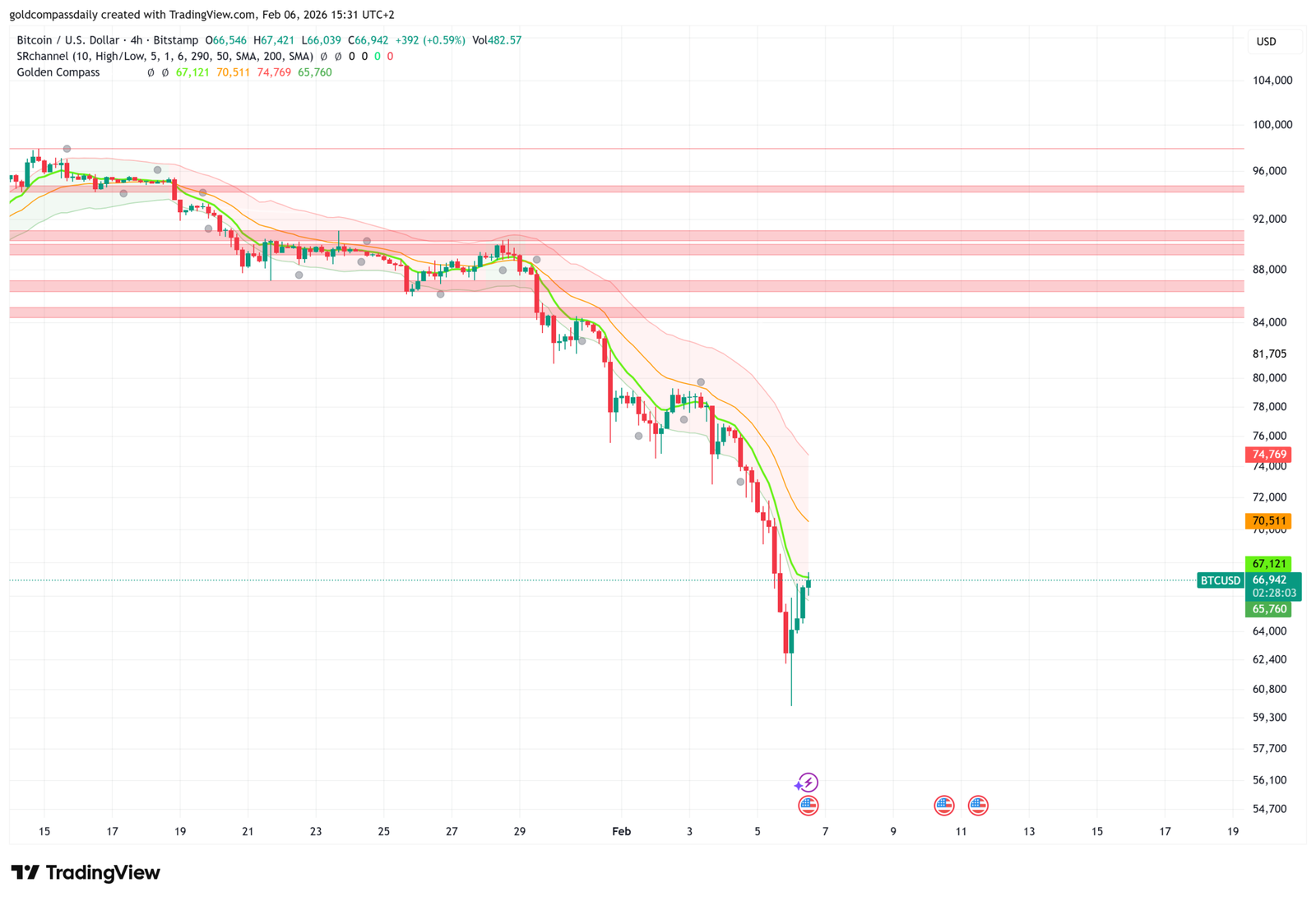
Analyzing the 4-hour timeframe, the Bitcoin Price Crash accelerated after the asset failed to hold the $70,000 pivot point. This breakdown triggered a cascade of “stop-loss” orders, resulting in over $1.4 billion in liquidations within a single 24-hour period.
- Support Levels: Market analysts are closely watching the $58,000–$60,000 zone. A sustained close below $58,000, which aligns with the 200-week moving average, could open the door to a deeper correction toward $50,000.
- Resistance Zones: For a bullish recovery to begin, Bitcoin must first reclaim the $67,000 level and consolidate above $70,000. Until then, any bounce is likely to be met with “exit liquidity” from institutional sellers.
- Leverage Unwind: The current volatility is being fueled by the unwinding of leveraged long positions. According to CoinGlass, roughly $1 billion in Bitcoin positions were wiped out on Thursday alone.
Macro Factors: The “Warsh Fed” and AI Rotation
The Bitcoin Price Crash isn’t happening in isolation. Analysts point to the recent nomination of Kevin Warsh as the next Federal Reserve chair as a primary catalyst. Warsh is perceived as a “hawk” who may favor a smaller Fed balance sheet, a move that typically drains liquidity from speculative assets like crypto.
Furthermore, a massive rotation is underway. Traditional investors are pulling billions out of spot Bitcoin ETFs—$5.7 billion between November and January—to favor defensive sectors and traditional safe havens like gold. This shift has been compounded by weakness in the AI-linked tech sector, which has historically tracked closely with crypto risk appetite.
Miners and Corporate Treasuries Under Pressure
As prices remain suppressed, the focus shifts to Bitcoin miners and corporate buyers like Strategy (MicroStrategy). With Bitcoin’s average purchase price for some major firms now sitting above current market levels, balance sheets are being squeezed. If prices continue to slide, the risk of “forced selling” by these large entities could intensify the Bitcoin Price Crash, creating a vicious cycle of supply hitting the market.
Conclusion: Rebound or Reversal?
Despite the grim technical picture, some contrarian analysts suggest the market is reaching “capitulation,” a phase that often precedes a major bottom. However, with current drawdowns exceeding thresholds used to define a bear market, the path to recovery will likely take months rather than weeks. Investors are advised to watch the $58,000 support level closely—it may determine the fate of the 2026 Bitcoin Price Crash.